
What does 'major defect' mean in a building inspection report?
It's 11pm. You've just had the building inspection report land in your inbox for a house you'd already started picturing yourself in. Somewhere around page 23 you find the phrase major defect. Then on the next page: major defect. Then: this item should be rectified prior to settlement. You scroll back up, because nothing in the first 20 pages prepared you for that phrase, and your finance approval is Friday.
This is the question you're trying to answer in that moment: is this a dealbreaker, or is it normal?
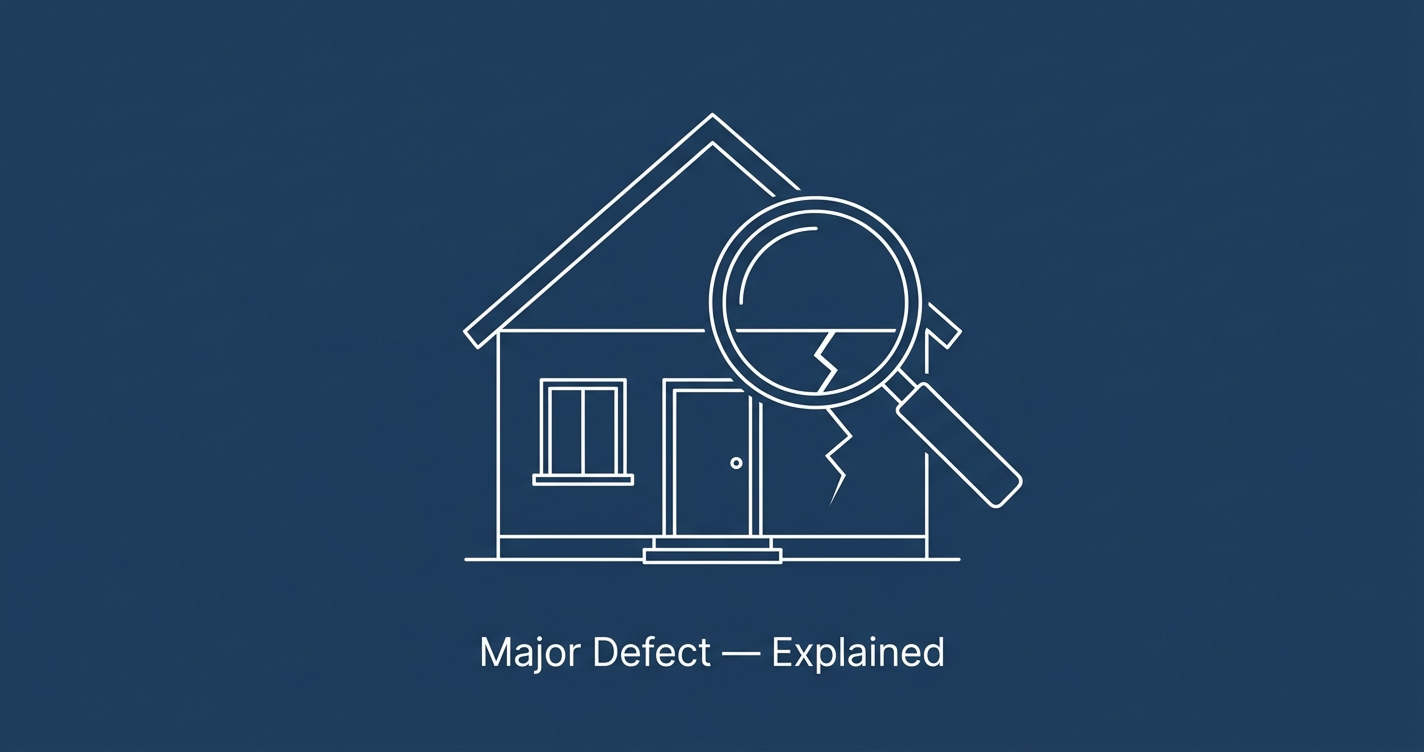
The short version: in an Australian building inspection report, a major defect is an issue the inspector has judged serious enough to affect the value, safety, or habitability of the property, or significant enough that a licensed trade needs to assess and rectify it. It is not the same as "walk away from this house". Most properties older than about thirty years will have at least one. But it also isn't something you can ignore.
Where the term comes from
The phrase "major defect" isn't informal. It comes from AS 4349.1-2007, the Australian Standard that guides residential building inspection reports. Inspectors work to AS 4349.1 because their professional insurance requires it and because it's the only nationally consistent framework any of them share.
Under that standard, a major defect is broadly one that:
- affects the structural integrity of the building,
- needs urgent attention before it gets worse,
- compromises the safety or functional performance of the building, or
- typically requires a specialist trade to repair, not a handyman.
That last point is the one buyers usually miss. Inspectors don't classify something as a major defect because it's expensive. They classify it that way because it needs the right person looking at it. A $1,200 re-lay of a section of gutter can be a major defect, while $6,000 of internal repainting won't be. The word "major" is about the kind of attention required, not the size of the cheque.
What a major defect actually looks like
Inspectors don't write "major defect" on anything they could reasonably call wear and tear. When you see it in a report, it's usually pointing at one of the following categories. None of these are hypothetical - they are the items that come up again and again across Australian inspection reports.
Structural cracking. Step cracks in brickwork wider than about 5mm, diagonal cracking across lintels, separation between the house and an attached garage or deck, or any crack that runs through both the brick and the mortar. Hairline cracks in plaster are cosmetic. Cracks you can slide a coin into are not.
Roof frame issues. Sagging ridge lines, rotted rafters, water-damaged battens, or any sign the roof structure isn't doing its job. Anyone who has bought an older inner-Sydney terrace or an inner-Melbourne Edwardian has probably seen one of these on a report.
Subfloor problems. Bearers or joists with rot, borer damage, or active termite activity. Standing water under the house. Bad falls that push water back toward the slab instead of away from it. This is especially common in Queenslander-style homes across Brisbane on timber stumps, and in Federation cottages across inner Melbourne and inner Sydney.
Drainage and water ingress. Roof leaks with staining on the ceiling, failed flashings, blocked downpipes, stormwater connections that go nowhere, and rising damp in older load-bearing walls. Rising damp in particular is a recurring major defect in the Victorian terrace stock across Melbourne, Sydney, and Adelaide.
Termite activity. Any evidence of current or past termite activity in structural timbers - mud leads, frass, hollow-sounding timbers, or previous treatment records the vendor hasn't disclosed.
Non-compliant work. Electrical work that doesn't meet current regulations, plumbing that wasn't permitted, decks and balconies with framing that isn't properly fixed, or anything that looks like an unapproved owner-builder job.
Safety items. Loose balustrades, substandard deck handrails, faulty smoke alarms, pool fencing that doesn't comply, or anything the inspector specifically calls a "safety hazard".
If your report's major defects fall into these categories, you're in well-mapped territory. Plenty of people have bought houses with exactly these findings and been fine - with the right information.
What it practically means for you as the buyer
Three things change the moment "major defect" shows up in your report.
First, rectification stops being optional. You can't plausibly say "we'll look at it later" for a major defect, because the inspector has documented it and you now know. If something goes wrong after settlement, like a collapsed deck or a roof failure, and the issue was in the report, your legal and insurance position is different from someone who never had an inspection.
Second, your negotiation position changes. A major defect, in writing, is legitimate grounds to ask for a price reduction, ask the vendor to rectify before settlement, or walk away if your contract's conditions let you. Real estate agents know this. They won't love the conversation, but they won't be shocked by it either.
Third, you need the right person quoting the work. This is the step most first home buyers skip. A licensed tradie in the relevant trade - builder, structural engineer, plumber, roofer, pest controller, electrician - needs to eyeball the item and give you a rough written quote. Without that number, you're negotiating in the dark. With it, you have a concrete figure you can put in front of the vendor.
What to do next
If you've just read "major defect" in your own report and you're trying to work out the next move, the three actions below are the ones that actually change your outcome.
1. Read the action-timing language before anything else. The inspector will usually use one of three phrases next to each finding:
- should be rectified prior to settlement
- should be addressed within the first 12 months
- recommend ongoing monitoring
That phrase matters more than the word "major" itself. A major defect flagged for "ongoing monitoring" is a very different situation from one the inspector wants fixed before you take the keys.
2. Get a licensed tradie to quote the rectification. You need the right trade for the finding. A structural engineer for serious cracking. A roofer for roof frame or tile issues. A plumber for drainage. A pest controller for termites. A licensed builder for decks, balconies, and framing. The quote does two things: it turns the abstract finding into a negotiating number, and it confirms whether the inspector's severity rating was warranted.
3. Decide what outcome you actually want from the vendor. There are really only three: you ask the vendor to rectify before settlement, you ask for a price reduction equal to the quote, or you accept the finding and proceed as-is. Your conveyancer is the right person to help you structure this, not the inspector, not the agent, and not a forum on the internet.
Questions worth asking
This is the part buyers most often regret not doing. Once you've read the report, the inspector is usually willing to answer a few follow-up questions over the phone, and the vendor is obliged to respond to questions your conveyancer puts to them in writing.
For your inspector:
- Of the major defects you flagged, which ones would you rectify before moving in, if this were your house?
- Is any of what you've flagged a safety issue that should be addressed immediately?
- How extensive are the likely repairs - are we talking a day's work or a few weeks' work?
For the vendor:
- Do you hold a builder's quote, invoice, or rectification history for any of the items flagged as major defects?
- Was a council permit issued for any structural work, additions, or the deck, and was it signed off?
- When was the last time the roof, subfloor, and drainage were inspected or maintained?
For your conveyancer:
- Given my contract's conditions, can I still use these findings to renegotiate or withdraw?
- What is my legal position if the vendor refuses to rectify major defects before settlement?
- Are there any clauses in the contract I need to act on within a specific window?
The answers to these eight questions will almost always tell you whether to proceed, renegotiate, or walk.
A note on capital-city variations
The same AS 4349.1 standard applies nationally, but the type of major defect that turns up varies by city and building stock:
- Melbourne and Sydney (inner suburbs): Victorian and Federation stock means rising damp, deteriorated mortar, stumped subfloors, and old roof structures come through as majors most often.
- Brisbane and Gold Coast: Queenslanders on timber stumps mean subfloor issues, borer damage, and termite activity dominate.
- Perth: roof tile deterioration, cement-sheet eaves, and older reinforcement corrosion are frequent flags.
- Adelaide: similar to Melbourne for Victorian-era stock, with sandy soil movement adding foundation cracking to the list.
- Canberra and Hobart: cold-climate housing means roof flashings, insulation deficiencies, and condensation damage come through as majors more than they would in warmer cities.
If you're buying interstate or overseas and can't walk through the property yourself, you're leaning even harder on the report than a local buyer. The major defects section is where you spend your time.
If you're still not sure what to do
Most first home buyers' confusion isn't about the word major. It's about what to do with the information once they've read it. Inspectors write to AS 4349.1 because they have to. They don't write to you, specifically, standing in your kitchen at 11pm trying to work out whether your dream house is worth an extra $30,000 of repairs.
If your own report is full of phrases like major defect, recommend further investigation, and should be rectified prior to settlement, and you're not sure what any of it actually means for your decision - Snagger translates Australian building and pest inspection reports into plain English. Every defect explained, severity rated, matched to the right trade, with questions to ask your inspector, vendor, and conveyancer. You can also have a look at a real sample report before you upload your own, to see what the full analysis looks like.
You've already paid for the inspection. The answers are in there. You just need to know what they're saying.
Your report. In plain English.
Upload your own Australian building or pest inspection report and get the major defects explained, rated by severity, and matched to the right tradie.
Upload your reportSnagger is a comprehension aid only. This article is general information and does not constitute professional building, legal, or financial advice. Always consult a licensed building inspector, conveyancer, or other qualified professional before making any purchasing decision.
More articles
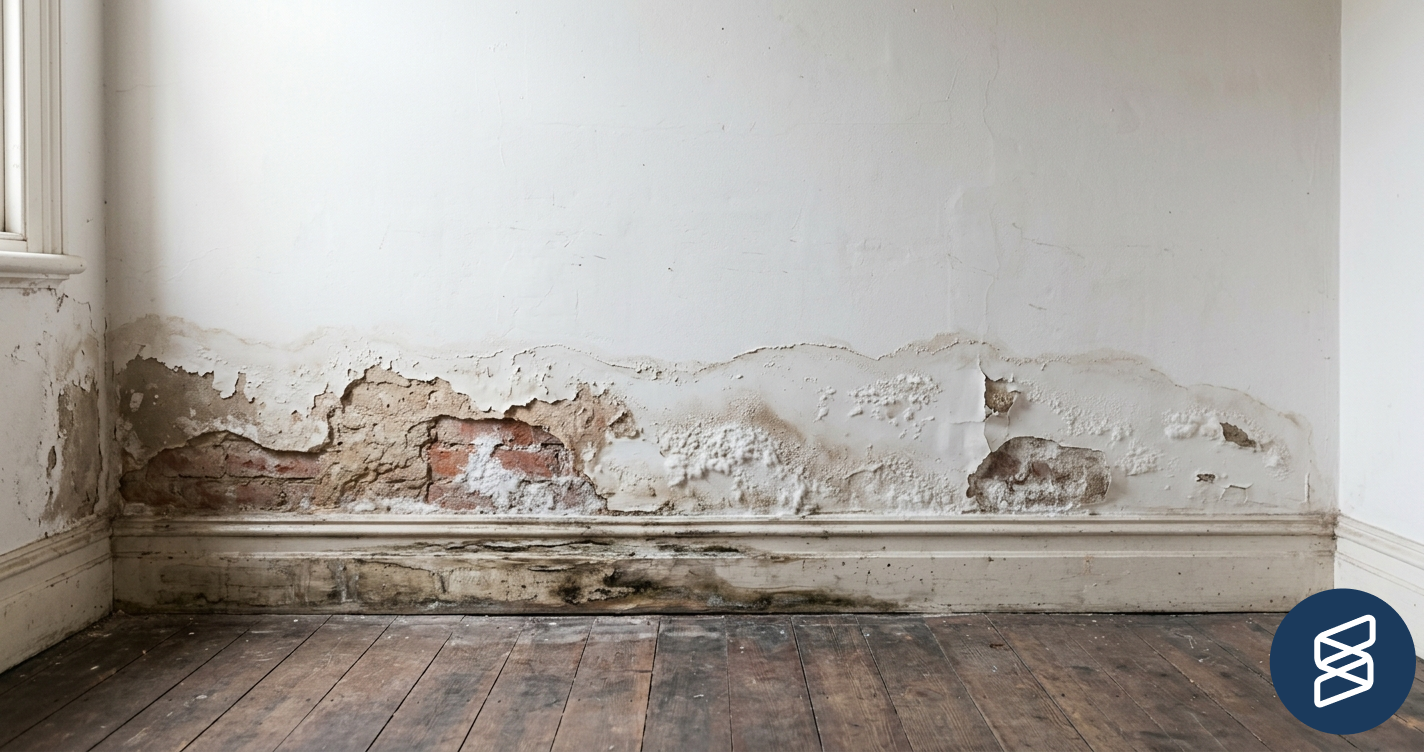
Is rising damp serious when buying a house in Australia?
Your building inspection flagged rising damp. Here's what it actually is, how serious it can be, which Australian homes are most at risk, and what to do before settlement.
What does 'recommend further investigation' mean in a building inspection?
Your Australian building inspection says 'recommend further investigation' and you don't know if that's serious. Here's what it means, why inspectors write it, and what to do next.